.png)

Why Competitor Price Monitoring Matters More in 2026
Prices on e-commerce platforms don't move weekly. In a Visualping sample of 9,705 active monitors watching competitor pricing pages in April 2026, 42% flagged at least one price change within a 30-day window — with the median check running every 2.8 hours. The velocity is sharper in specific verticals: HubSpot's pricing page changed on 96% of those monitors. Zoom's on 100%.
A quarterly pricing review, or even a weekly manual check, misses most of what moves. The businesses winning on price in 2026 aren't the ones with the lowest prices — they're the ones who know what competitors charge before customers do.
There are two ways to build a competitor price monitoring system in 2026:
- SaaS pricing dashboards — tools like Prisync, Competera, and Price2Spy that handle data collection, matching, and reporting for you. Best for most e-commerce retailers.
- Custom data collection pipelines — building your own scraper with an antidetect browser and proxies. Best when you need flexibility, custom sources, or are scraping at scale beyond what SaaS tools cover.
This guide covers both, including the anti-detection setup that makes custom scraping viable in 2026 — when Cloudflare now protects over 20% of all websites and blocks standard Playwright/Selenium scripts in seconds.
Part 1: Best SaaS Competitor Price Monitoring Tools
SaaS price monitoring tools handle the hard parts — crawling, matching products across competitor catalogs, deduplicating data, and surfacing actionable alerts. For most retailers, they're the right starting point before building anything custom.
1. Prysync
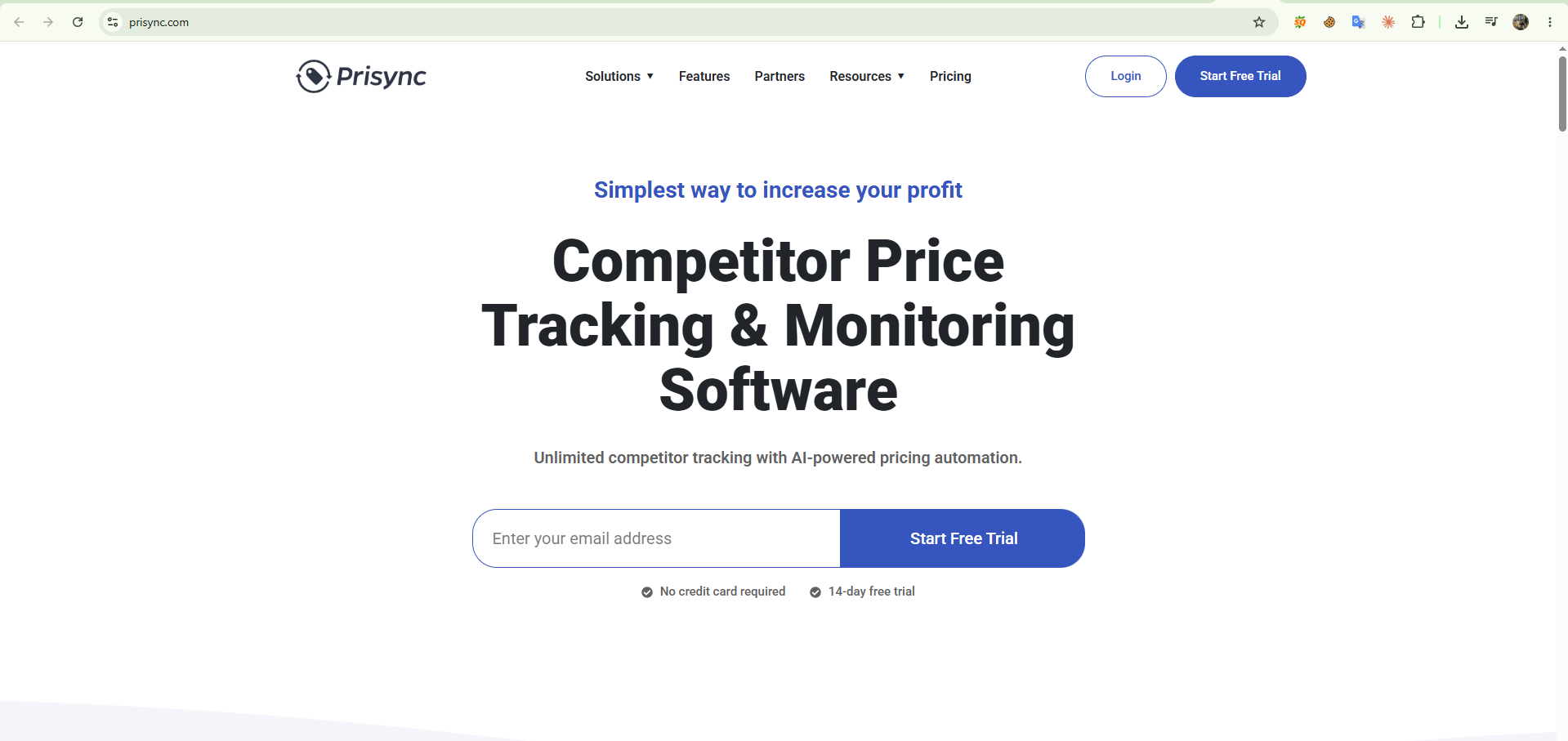
Prisync leads the competitor price monitoring category for e-commerce retailers in 2026, earning its position through a combination of real-time tracking accuracy, dynamic repricing automation, and strong integration coverage across Shopify, Amazon, BigCommerce, Magento, and WooCommerce. It's the top choice in independent 2026 evaluations, particularly for SMBs and mid-market retailers who want a finished intelligence dashboard rather than a data pipeline to build themselves.
The dynamic repricing engine is Prisync's standout feature: you define rules like "always price 1% below the lowest competitor" or "never go below cost plus 30% margin," and Prisync adjusts your store prices automatically as the market moves. For fast-moving categories like electronics, beauty, and sporting goods — where prices can shift within hours — this delivers measurable conversion gains without manual intervention.
2. Competera
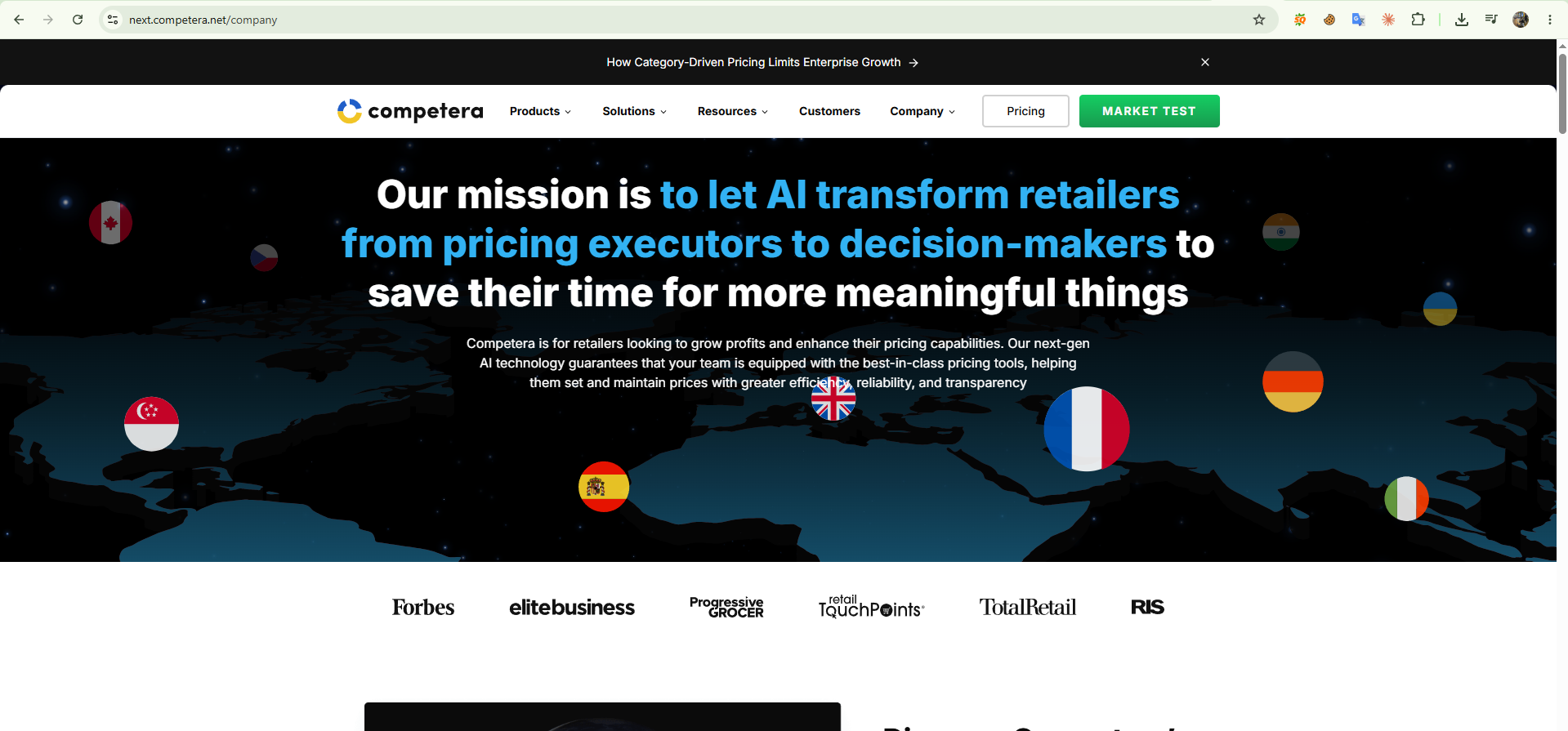
Competera operates at a different level from Prisync — it's an AI-powered demand-elasticity pricing platform built for large retailers with complex, multi-category strategies. Rather than rule-based repricing ("price X% below competitor"), Competera uses machine learning to recommend optimal prices based on demand signals, market dynamics, and margin targets simultaneously.
The key edge over Prisync is pricing intelligence that goes well beyond any SME-focused monitoring tool. Competera can model how a price change in one category affects conversion and margin across related categories — the kind of cross-category elasticity modeling that drives material revenue impact at scale.
3. Price2Spy
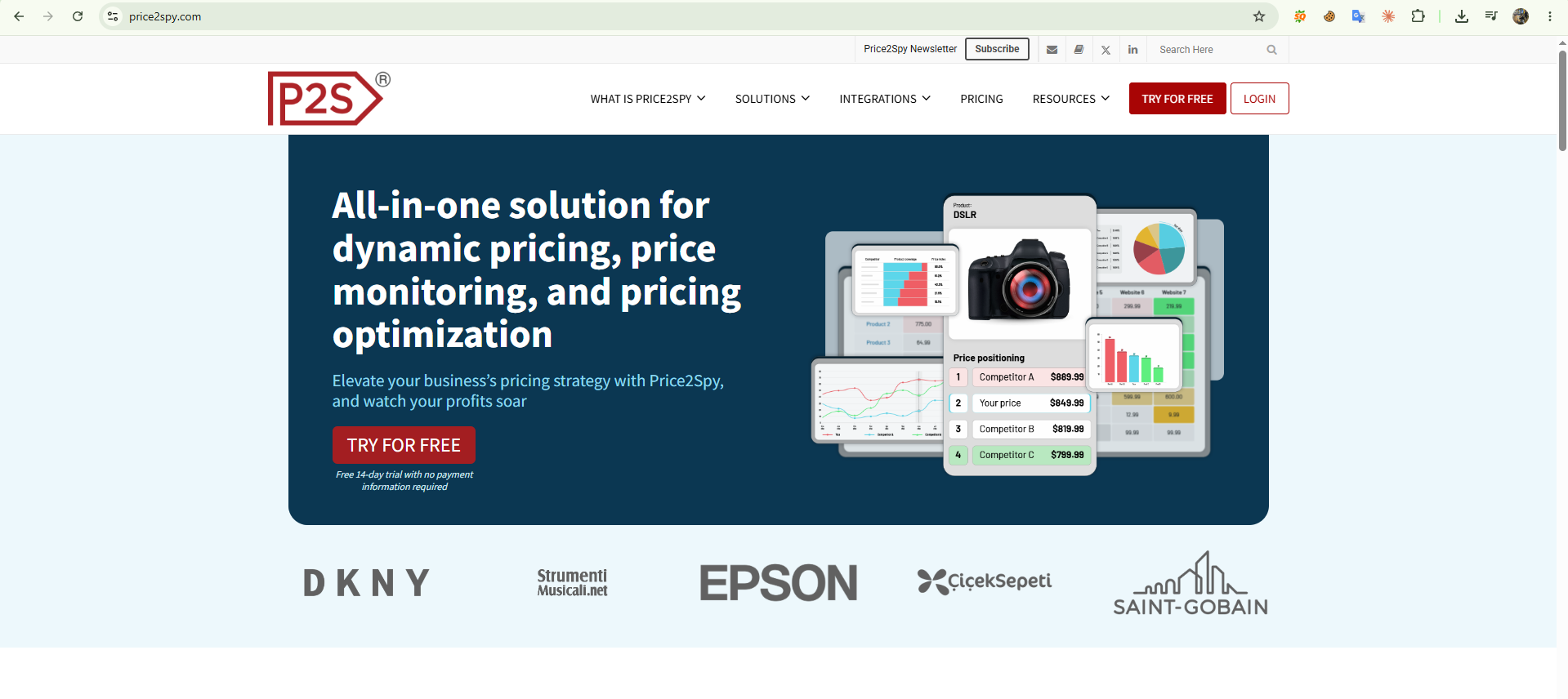
Price2Spy distinguishes itself through breadth of source coverage — it can monitor competitor prices across virtually any website, marketplace, or comparison engine, including highly protected sources that other tools struggle to access. It's the strongest choice when your competitive landscape is fragmented across many channels that don't fit neatly into Google Shopping or Amazon feeds.
Also Worth Considering
- Wiser Solutions — MAP enforcement specialist with retail intelligence and legal-grade violation evidence. Strong when brand protection is as important as price monitoring.
- Minderest — AI-powered product matching across competitor catalogs, good for manufacturers tracking reseller pricing.
- PricingHunter — SME-focused, daily price alerts with no contracts and no add-on charges. Simpler than Prisync but more affordable for smaller catalogs.
- Pricelysis — Free tier for up to 50 SKUs, hourly monitoring on paid plans, MAP violation evidence. Good starting point for brands new to price monitoring.
Comparison: SaaS Price Monitoring Tools at a Glance
| Tool | Best For | Starting Price | Free Plan/Trial | Repricing | API |
| 🥇 Prisync | E-commerce retailers (SMB → mid-market) | $59/mo | 14-day trial | ✓ (Premium+) | ✓ (Premium+) |
| Competera | Enterprise, multi-category AI pricing | Custom | Contact sales | ✓ ML-driven | ✓ |
| Price2Spy | Broad / fragmented source coverage | $23.95/mo | 30-day trial | ✓ | ✓ |
| Wiser Solutions | MAP enforcement + retail intelligence | Custom | Contact sales | ✓ | ✓ |
| PricingHunter | SME retailers, no contracts | ~$20/mo | Free trial | ✗ | ✗ |
| Pricelysis | Brands new to price monitoring | Free (50 SKUs) | Free forever tier | ✗ | ✗ |
Part 2: Why Price Scraping Gets Blocked in 2026
SaaS tools work for structured competitor monitoring. But when you need price data from sources those tools don't cover — regional marketplaces, niche competitors, direct brand sites, or custom intelligence workflows — you need to scrape yourself. And in 2026, scraping is harder than it's ever been.
An estimated 40% of websites use Cloudflare's CDN, and Cloudflare Bot Management has become one of the most effective anti-bot systems in existence. Cloudflare now protects somewhere north of 20% of all websites. A standard Playwright or Selenium script gets blocked in seconds — not minutes.
The Detection Stack: What Cloudflare Actually Checks
Understanding the detection layers is essential before building any anti-blocking solution. Cloudflare's bot detection isn't one thing — it's a stack of signals evaluated together:
🔐TLS Fingerprinting
Before your request reaches the server, Cloudflare inspects the TLS handshake. Python requests, Node axios, Go net/http — each has a distinct fingerprint that doesn't match any real browser. This layer blocks most scrapers before JavaScript even runs.
🌐JavaScript Challenges
Cloudflare injects JS that checks for browser APIs, canvas rendering, WebGL, and other signals. Standard headless Chrome sets navigator.webdriver = true. Cloudflare checks this and dozens of other signals simultaneously — not just the obvious one.
📊Behavioral Analysis
Request timing, scroll patterns, mouse movements, and session behavior. Scrapers that hit pages at perfect intervals, never scroll, and never move a mouse look nothing like real users. Cloudflare also now uses generative honeypots — returning 200 OK responses with hallucinated data to waste crawl budget.
🌍IP Reputation
Datacenter IPs (AWS, GCP, Azure, DigitalOcean) are heavily flagged. Free proxy lists are completely burned — every scraping bot on the internet has used them. Even residential IPs get scored by usage pattern and ASN reputation.
Part 3: The Anti-Detection Setup for Price Scraping in 2026
The solution to getting blocked isn't a single tool or trick — it's a layered approach that addresses every detection signal simultaneously. Here's the setup that works reliably for competitor price monitoring in 2026.
The Three Layers You Need
🧬Layer 1 — Browser Fingerprint
Each scraping session needs a unique, real-looking browser fingerprint — canvas hash, WebGL, audio context, navigator properties, screen resolution, and timezone all matching a single consistent device profile.
🌍Layer 2 — IP Address
Residential or mobile proxies per session. Never datacenter IPs for Cloudflare-protected sites. One proxy per concurrent session — never share. Timezone must match proxy location.
🤖Layer 3 — Behavior
Random delays between requests (1–4 seconds). Scroll before extracting data. Vary session timing. Don't hammer pages at fixed intervals. Warm up sessions before scraping sensitive pages.
⚡The Stack
Hidemium antidetect browser (fingerprint layer) + NodeMaven mobile proxies (IP layer) + Prompt Script or Playwright API (automation layer). All three working together.
Step-by-Step: Setting Up Price Monitoring With Hidemium
1. Create Isolated Profiles in Hidemium
Open Hidemium and create a separate browser profile for each competitor site you're monitoring. Give each profile a clear name (e.g., amazon-price-monitor-US).
In profile settings, set the OS and platform to match a real desktop user from your target market. Let Hidemium auto-generate the canvas hash, WebGL, audio fingerprint, and navigator values — don't override them manually unless you have a specific reason to.
2. Assign a Residential or Mobile Proxy Per Profile
In the Proxy tab of each Hidemium profile, add a dedicated residential or mobile proxy session. For competitor price monitoring, residential proxies from the target country work well. Mobile proxies provide the highest trust score but are more expensive.
3. Verify Your Setup Before Scraping
Launch the profile and navigate to browserleaks.com and pixelscan.net. Confirm:
- No WebRTC IP leak — real IP must not be visible
- Timezone matches the proxy's IP location
- Canvas fingerprint is consistent (not flagged as injected)
- PixelScan shows "consistent" profile rating
If any check fails, do not proceed with real scraping sessions from that profile.
4. Automate Price Extraction — Two Options
Option A — Hidemium Prompt Script (no-code): Describe the task in plain language. Hidemium's AI generates and runs the automation script across all configured profiles.
Option B — Playwright API (for developers): Launch Hidemium profiles programmatically, inject your extraction logic, and pipe data to your database.
5. Store, Alert, and Automate Pricing Responses
Pipe extracted price data into a simple structure:
{
"product_id": "SKU-12345",
"competitor": "amazon.com",
"price": 49.99,
"currency": "USD",
"stock": "in_stock",
"scraped_at": "2026-07-10T14:32:00Z",
"previous_price": 54.99,
"change_pct": -9.1,
"alert_triggered": true
}
Set alerts when change_pct exceeds your threshold (e.g., competitor drops more than 5%). Connect to Slack, email, or your pricing system via webhook. For dynamic repricing, pipe the data directly into Prisync's API or your own pricing engine.
Build vs. Buy: When to Use SaaS vs. Custom Scraping
| Scenario | Recommended Approach | Why |
| Track 10–1,000 products on Amazon + Shopify stores | Prisync SaaS | Faster setup, built-in matching, repricing engine handles the complexity |
| Monitor niche competitors not on major marketplaces | Custom scraping (Hidemium) | SaaS tools limited to structured channels; custom scraping handles any URL |
| Need data updated every 30–60 minutes (real-time) | Custom scraping or Prisync Platinum | Most SaaS plans update 3x/day; Platinum offers instant; custom gives full control |
| Large catalog, 5,000+ SKUs across many competitors | Prisync Platinum or custom pipeline | Prisync Platinum tops at 5,000 products; custom scales further |
| Need raw data feed into own analytics/BI system | Custom scraping (Hidemium API) | Full data ownership, custom schema, direct database integration |
| Enterprise pricing intelligence with ML optimization | Competera | ML-based demand elasticity modeling beyond rule-based systems |
| Brand protecting MAP pricing across resellers | Wiser or Prisync Platinum | Built-in MAP workflows, violation evidence, seller scanning |
Related Blogs
.png)
Due to the nature of Telegram, large-scale Airdrop games cannot run on browsers and can only be played on mobile devices, causing inconvenience for players, especially with games like Hamster Kombat. To address this issue, Hidemium has developed an exclusive extension to Bypass Telegram Game Bots. This tool allows users to easily participate in Telegram Airdrops directly from the browser, saving[…]

A Twitter/X account may be suspended because of spam or platform manipulation, suspicious security activity, violations of X Rules, or copyright complaints. If your Twitter account is suspended, review the notice from X, complete any required identity verification, and use the official appeal process if you believe the suspension was made in error.For brands, advertisers, and marketers, X is an[…]

Accessing blocked websites is no longer difficult if you know how to properly use a Proxy. This is considered one of the most optimal solutions to bypass internet restrictions while maintaining privacy and personal data security. Let Hidemium walk you through 3 easy-to-apply Proxy methods for firewall circumvention!1. Use web-based Proxy servicesProxy websites act as intermediaries that help hide[…]
Are you doing business in the traditional direction and want to find a new guide? Do you have a headache because the number of customers is decreasing, and the competition is increasing? So let me reveal that Facebook ads can help you troubleshoot the above problems. Through the article, let’s find helpful information about creating and managing Facebook ad accounts!Ad accounts and things to[…]

How to Turn Your Phone into a Passive Income Machine The Untapped Potential in Your Pocket That smartphone you're constantly checking? It could be making you money right now. While you're scrolling through social media or letting it sit idle on your desk, you're missing out on legitimate income opportunities that require almost zero effort.Here's the thing most people don't realize: your phone is[…]

iOS on PC: Best Emulators, Gaming & Integration GuideApple's ecosystem is famous for its "walled garden" approach — seamless, secure, and tightly optimized. But what happens when you need to step outside that ecosystem? Whether you are a software developer testing a new application, a gamer wanting a larger screen, or a professional streamlining a cross-platform workflow, the desire to run iOS on[…]
