
Online marketers often manage dozens to hundreds of accounts the same time. So how to do they do?
You have everything from social and merchant accounts for yourself and your clients. Each account must be accessible by different people, such as VAs (virtual assistants) and team members, throughout any given project. You need an effective way to allow access without setting off verification alarm bells on the account platforms, and of course, you need everything to be done securely.
There are 3 ways to marketers share account access. It is either offline storage, online storage, or session sharing. The article will show each account management method and help you understand which is better to the rest.
Share account access without verification checks or risk
3 ways to manage multi accounts
- Offline sharing
- Offline sharing is when you give someone a plain-text password and log into the account on their machine.
- Offline sharing is quick and easy, but it’s neither secure nor efficient:
- You have to disclose passwords. It’s a hassle and may lead to financial loss if that person goes rogue with the account. They can be the most trustworthy VA or your team members; there’s still a chance they might mishandle your passwords or have a compromised machine. It makes the account and data open to attack and accessible to third parties.
- Security checks will be a problem. All major platforms do location verification and other security checks during login time. Logging into an account through a separate machine will throw up red flags. It cause to calls for confirmation, belike the “Name Your Friends” on Facebook and the “Verify Through SMS” on PayPal.
- These checks are not convenient. Futhermore, if the accounts have too many red flags appear, they may even be suspended.
Online sharing
When you share passwords with someone else’s computer through a tool like LastPass, that is online sharing.
Online sharing is slightly more secure but not completely safe and prone to problems:
- Still detect unusual access when security checks. The person accessing accounts does not have to type the password physically, but the account platforms are still aware that it’s not the regular user logging in. Not convenient security checks belike “Name Your Friends” on Facebook and “Verify Through SMS” on PayPal will still come up.
- The password can be still discoverd by malicious receivers. The online password must be plain text from the receiver’s machine. The password must be stored on the receiver’s device, non-encrypted. Any savvy user can locate the password and save it without your knowledge.
- Password may be intercepted. There’s a possibility of a man-in-the-middle attack if you or the receiver of the password does not have a secure machine. When without your knowledge, the third party may gain access to the account.
Online sharing is overall better than offline sharing – but there is only one 100% secure way to share accounts without throwing up red flags on account platforms.
Session Sharing
Hidemium allows you to share your session with any other Hidemium user. By sharing your session, you avoid every problem with online and offline sharing!
- It isn’t necessary to share password. Alternatively, a cookie file what is transferred to the other user consist of an active session ID. Clients will be requested the cookie file when they visit a website. Web will see the active session ID, and log them into the corresponding account automatically. The other clients do not need the password to log in. Also, they have no way of changing the password once logged in.
- Cookie transfer is entirely secure. The cookie file is transferred with asymmetrical encryption, which means it is encrypted with the other user’s public key and can be decrypted only with his private key. In essence, the hijacker will not be able to decode or use the cookie file to gain account access, even if it is intercepted.
- Security checks don’t happen. Hidemium creates a virtual environment for the other user that emulates a physical machine. Account platforms cannot detect that the account is being accessed through Hidemium. The second user can use another operating system in a different country. But because of Hidemium’s approach, the account platforms always think it is the original machine that accesses the account. Every possible security parameter is spoofed!
So, session sharing is the superior approach. If you are a marketing agency or independent marketer sharing account access with team members or VAs, to do it correctly, you must use a tool like Hidemium.
Share account access without verification checks or risk with Hidemium
+ One of the facets of this new update will be a control of access and the possibility to set up limitations when sharing an account. The Head marketing expert with initial access to the bill will have complete control over the session they shares. There are options to set up the accessibility of VAs or team members.
+ The lazy route (offline or online storage) can lead to security checks and account suspension. You open a gateway for anyone in the middle. The process is compromised due to the interception of the plain-text or cookie file. Also, your team members and VAs gain access to (or can access) the passwords themselves every time.
Hidemium solves all of those potential problems. Account platform security checks are avoided, team members and VAs never see the actual password, asymmetrical encryption removes the risk of a man-in-the-middle attack, and configurations of access rights for every profile soon.
Related Blogs
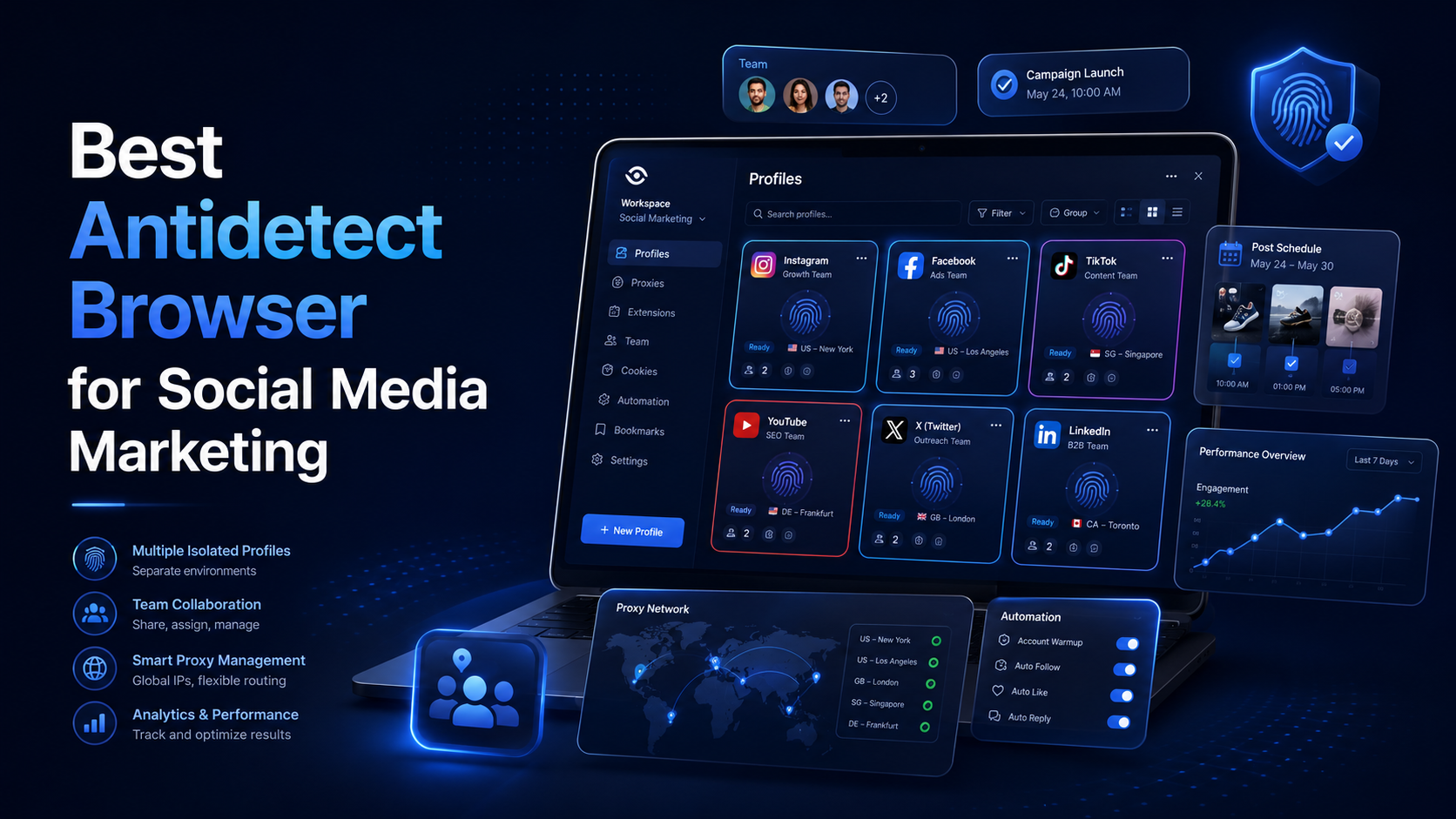
Best Antidetect Browser for Social Media MarketingSocial media marketing is no longer limited to publishing content on one Facebook or Instagram account. Agencies and in-house marketing teams may manage several brands, regional pages, advertising accounts, content calendars, and client workspaces at the same time.This creates an operational challenge. When multiple accounts are opened in the same[…]
.png)
In international flash sale campaigns, where time is of the essence and opportunities are fleeting, having an effective tool to assist in your shopping is incredibly important. Antidetect Browser is the solution that helps you manage multiple accounts and participate in flash sales without the risk of detection. This tool changes browser fingerprints, IP addresses, and personal identification[…]

Public Wi-Fi connections are becoming an indispensable part of modern life, especially when you travel, work remotely or entertain yourself at cafes, airports or shopping malls. However, using public Wi-Fi poses many security and privacy risks. In this article, Hidemium will share 5 simple but effective tips to help you stay safer when connecting to public Wi-Fi, avoiding data theft or personal[…]
.png)
Posters are among the most effective visual tools for marketing. They are used for events, promotions, branding, and social media campaigns. Nowadays, online tools make designing posters quick and easy. You don’t need design experience to create something professional.However, not all poster makers provide the same results. Some emphasize speed and automation. Others focus on creative manual[…]
.png)
Managing multiple eBay accounts is a vital strategy to help sellers optimize sales and reach a wider range of customers. However, this comes with challenges like avoiding account suspension, managing data, and optimizing sales operations. This article shares top SEO tips from leading marketers to help you manage multiple eBay accounts efficiently in 2025.1. Benefits of Managing Multiple eBay[…]
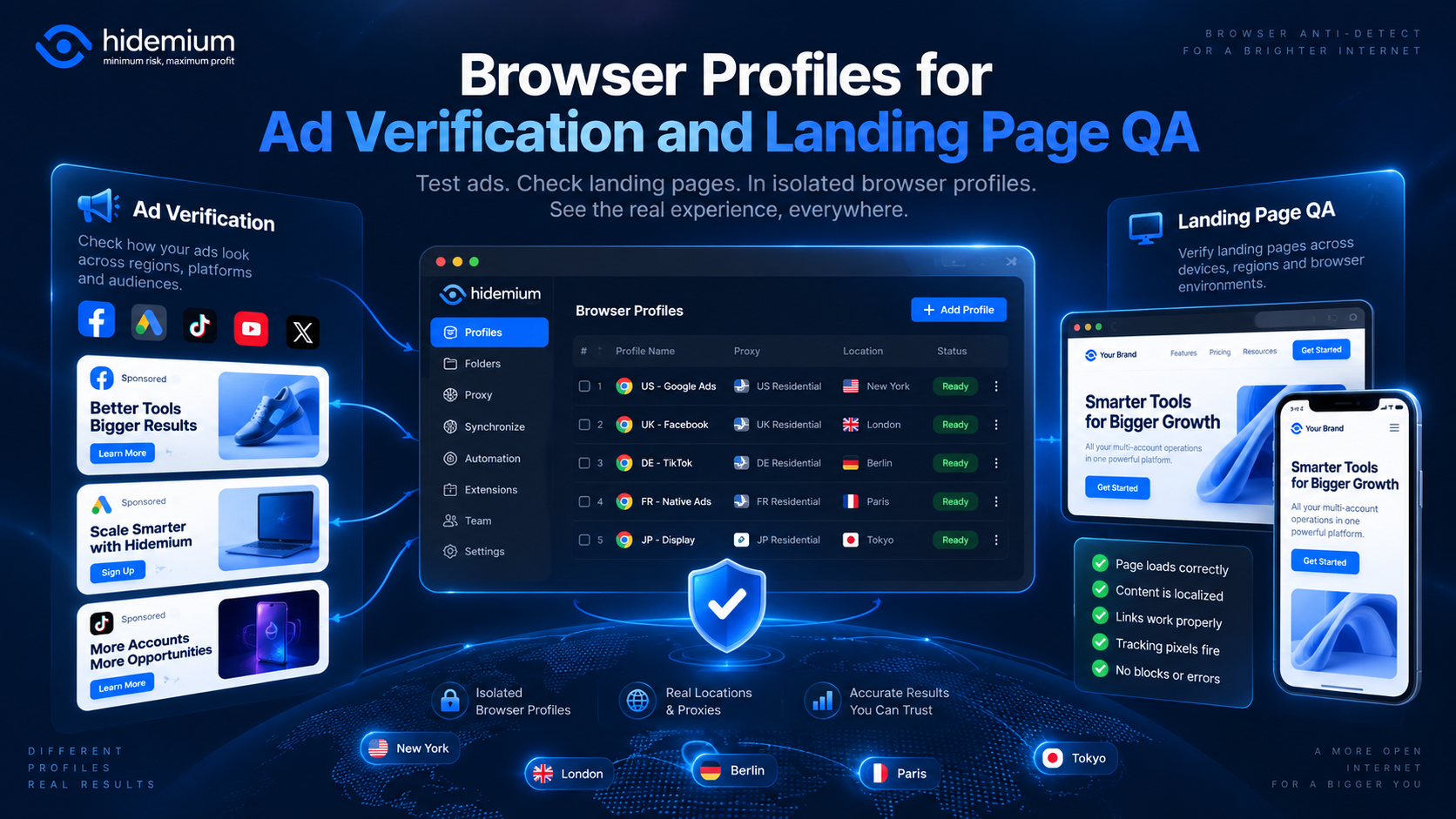
An ad campaign can look perfect inside an advertising dashboard and still fail after the click.The wrong language may appear.A regional promotion may not load.A returning visitor may see an old landing-page variation.Tracking parameters may disappear during a redirect.Or a campaign intended for one market may send users to content designed for another.These problems are difficult to catch when[…]
