Over-Reliance on Marketplaces: Why D2C Brands Are Re-evaluating Their Amazon-Centric Approach
Try Hidemium for free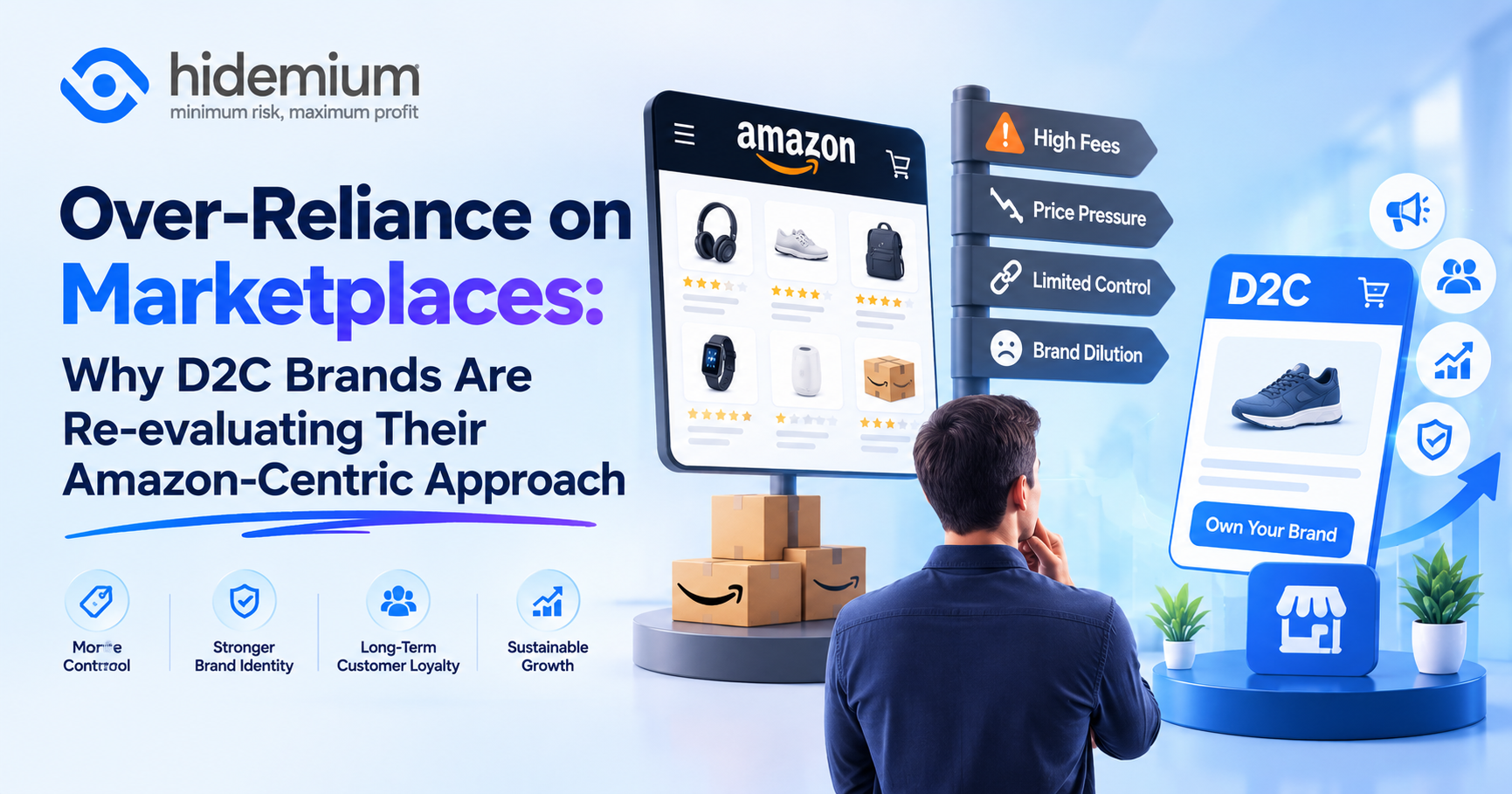

A few years ago, "sell on Amazon first, build a website later" was sound advice for most direct-to-consumer brands. The traffic was already there. The trust was already built. Why fight for attention on your own domain when millions of shoppers were already searching on someone else's?
That logic still has merit. But a growing number of D2C brands are quietly changing course, and the reasons have very little to do with fashion or trend-chasing. They come down to margin, ownership, and risk.
This guide breaks down what marketplace dependency actually costs a brand, why an owned channel is becoming a business necessity rather than a nice-to-have, and how to build that channel usually with the help of an e-Commerce Website Development Company without abandoning Amazon altogether.
What Marketplace Dependency Actually Means
Marketplace dependency happens when a brand's revenue, customer data, and growth trajectory sit almost entirely inside a platform it doesn't control. Amazon is the biggest example, but the same risk applies to any single-channel setup.
It's not just about where sales happen. It's about who owns the relationship once the sale is made. In a marketplace, that relationship belongs to the platform. On an owned site, it belongs to the brand.
Third-party sellers now account for roughly 61–62% of all paid units sold on Amazon, up from just 26% in 2007, according to Statista's ongoing tracking of Amazon's marketplace mix. That growth shows how central Amazon has become to D2C distribution — and how many brands now compete for the same shrinking pool of attention inside one storefront.
Why Amazon-First Worked (And Why the Math Is Changing)
Rising Fees Are Quietly Eating Margins
Amazon's referral fees range from roughly 8% to 45% of the sale price depending on category, with fulfilment, storage, and advertising costs stacked on top, according to Amazon's own seller fee schedule. Add sponsored ad spend, which has become close to mandatory for visibility, and many sellers are left handing over a third or more of every sales dollar before they've covered product cost.
That's a very different economics than running your own store, where the biggest recurring cost is often just platform hosting and payment processing.
You Don't Own the Customer Relationship
Amazon doesn't hand over customer emails, purchase history, or browsing behaviour. That means no retargeting, no loyalty program, no first-party data to feed into future campaigns. Every repeat customer has to be "re-found" through the same paid or algorithmic channel, every single time.
Algorithm and Policy Risk Sits Outside Your Control
A policy change, a suspended listing, or a shift in Buy Box logic can cut off revenue overnight. Brands that built their entire business on marketplace visibility have no lever to pull when that happens. An owned site never disappears because someone else changed the rules.
The Case for an Owned D2C Channel Alongside Amazon
None of this means brands should abandon Amazon. It means the smartest D2C businesses are building an owned channel in parallel, so the marketplace becomes one acquisition source instead of the entire business.
Data Ownership and First-Party Marketing
Every purchase on an owned site generates data the brand actually keeps: email addresses, purchase patterns, lifetime value. That data powers email flows, loyalty programs, and lookalike audiences that marketplaces simply don't allow.
Brand Control and Long-Term Equity
Product pages, imagery, storytelling, and customer experience are fully controlled on an owned domain. On Amazon, brands are boxed into a template designed to keep shoppers comparing prices, not building loyalty.
AI Search Visibility Favours Owned Domains
Search behaviour itself is shifting. Gartner has predicted that traditional search engine volume will drop by around 25% by 2026 as more queries move to AI chatbots and answer engines rather than blue-link results. Tools like ChatGPT, Gemini, and Perplexity pull answers from crawlable, structured content something an owned e-commerce site with proper schema and content can be optimised for. A marketplace listing simply isn't built to be cited as an answer.
This is where generative engine optimisation and traditional SEO start to matter as much as marketplace SEO ever did.
Amazon-First vs. D2C-First: A Practical Comparison
Factor | Amazon-First Strategy | Owned D2C Site Strategy |
| Customer data ownership | Not provided by the platform | Full first-party data ownership |
| Typical take on revenue | 15–45% referral fee plus fulfilment and ad costs | Payment processing (roughly 2–3%) plus hosting |
| Brand experience control | Limited to Amazon's listing template | Full control over design, story, and UX |
| Checkout and conversion risk | Amazon manages checkout and cart flow | Brand owns checkout; average cart abandonment industry-wide sits near 70%, per the Baymard Institute, making checkout optimisation a direct lever |
| AI search and answer engine visibility | Not indexable as an independent entity | Structured, crawlable content can be cited by AI Overviews and AI assistants |
| Platform risk | Policy or algorithm changes can cut revenue instantly | Brand controls uptime, policy, and pricing |
Choosing the Right Platform to Build Your Owned Channel
Building an owned channel is only useful if the platform underneath it can scale, integrate with existing tools, and support long-term SEO and AEO work. This is usually where brands bring in an e-Commerce Website Development Company rather than trying to patch together a DIY build.
Why WooCommerce Is a Strong Fit for Diversifying D2C Brands
WooCommerce gives brands full ownership of their store's code, data, and hosting environment, without the recurring platform fees that come with some hosted alternatives. For brands that already run on WordPress for content and blogging, professional woocommerce development services can extend that same environment into a full storefront, keeping content, SEO equity, and commerce under one roof.
It's also a practical fit for brands that want deep customisation of checkout flows, subscription models, or product configurators, since the plugin ecosystem and open codebase allow for that level of control.
A Practical Roadmap to Reduce Marketplace Dependency
- Audit revenue concentration. Know exactly what percentage of revenue and customer data sits on Amazon versus owned channels before making any changes.
- Build the owned site properly. Work with a D2C eCommerce Development Partner that understands both conversion-focused UX and technical SEO from day one.
- Capture first-party data early. Email capture, loyalty programs, and post-purchase flows should be live before traffic scales.
- Optimise for both search and AI answer engines. Structured data, clear product information, and genuine expertise signals help content surface in Google, AI Overviews, and tools like ChatGPT and Perplexity.
- Keep Amazon as a channel, not a crutch. Use it for discovery and volume, while directing brand loyalists and repeat buyers toward the owned site.
Final Thoughts
Amazon isn't the enemy here. Dependency is. A brand that treats the marketplace as one channel among several, backed by a well-built and properly optimised owned site, ends up with more control over margin, data, and long-term brand equity.
If you're weighing up how to build or strengthen that owned channel, Magneto IT Solutions works as a D2C eCommerce Development Partner, offering AI driven digital commerce solutions designed around exactly this kind of platform diversification.
FAQs
Does leaving Amazon mean losing sales? No. Most brands that diversify keep selling on Amazon while building the owned channel in parallel, rather than switching off marketplace revenue.
Is WooCommerce a good fit for a growing D2C brand? Yes, particularly for brands already using WordPress or those that want full control over hosting, data, and customisation without ongoing platform commission fees.
How long does it take to reduce marketplace dependency? It varies by brand size and existing infrastructure, but most businesses see meaningful traffic and revenue shift from an owned channel within six to twelve months of a proper SEO and AEO foundation being in place.
Related Blogs
Digital marketing today runs on speed and volume. Brands are expected to push out fresh creatives constantly, and traditional video production simply can’t keep up. That’s where an AI Facebook ad generator comes in. These tools take product links, scripts, or raw assets and turn them into ready-to-use Facebook video ads with minimal manual editing. 1. Pollo AI Pollo AI works as a practical AI […]

What is iTop VPN? iTop VPN is a service virtual private network (VPN) that helps protect identity, protect privacy, and increase security when accessing the Internet. This service encrypts access data and hides users' IP addresses, thereby avoiding tracking and overcoming geographical restrictions. In this article, Antidetect Browser Hidemium will guide you in detail Outstanding[…]

The choice AweSun – secure remote access software plays a vital role in helping large businesses, freelancers, and remote workers overcome the barriers of connecting and controlling computers in different locations. The right tools will give you the ability to seamless collaboration, session access and remote file transfer fast, efficient troubleshooting support anywhere in the world.To help you[…]
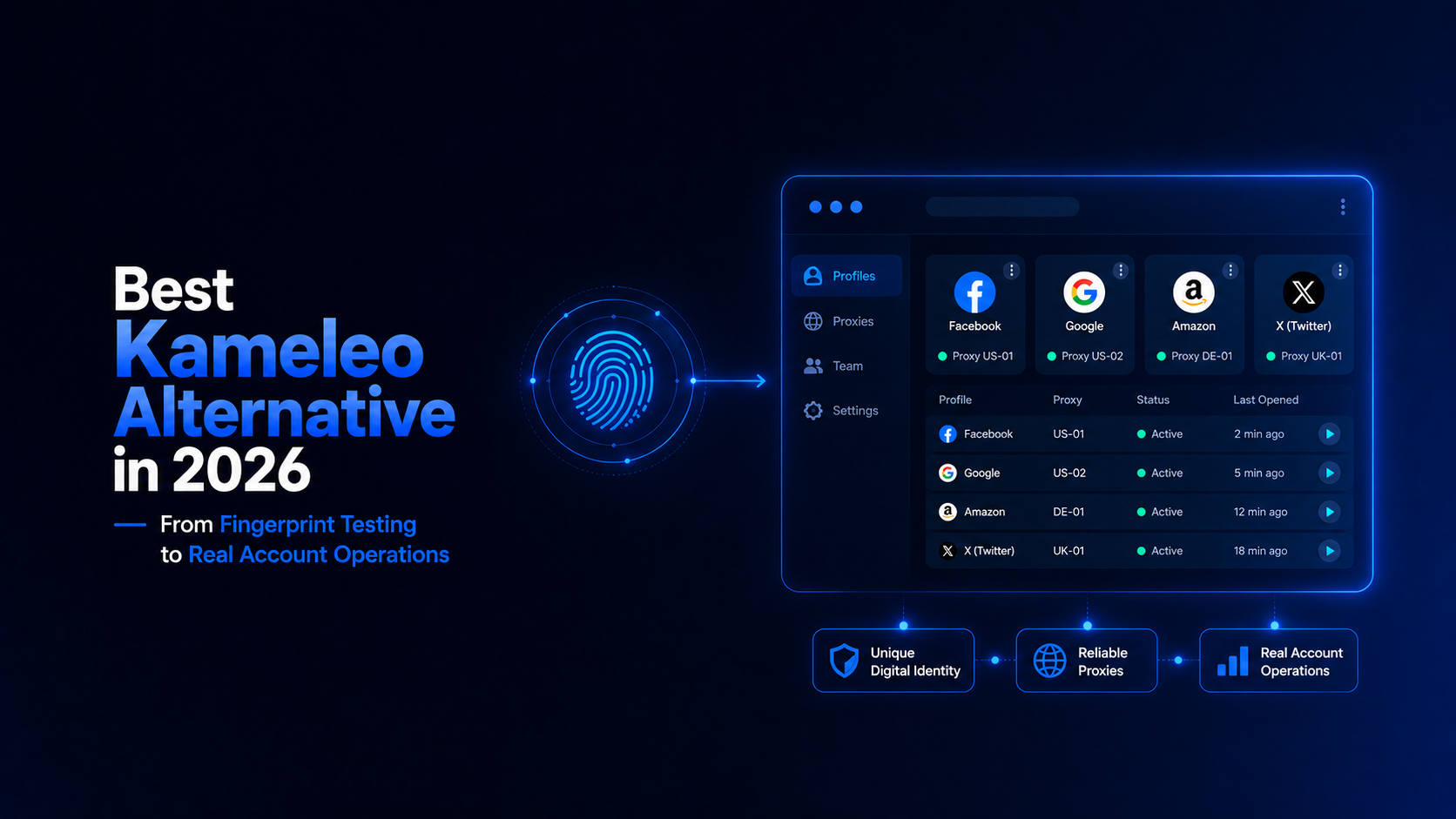
Best Kameleo Alternative in 2026: From Fingerprint Testing to Real Account OperationsThe best Kameleo alternative in 2026 is Hidemium for teams that need more than browser fingerprint testing. Hidemium is a practical browser profile platform for managing profiles, proxies, workspaces, team access, and scalable account operations in one organized system.Kameleo can be useful for users focused on[…]
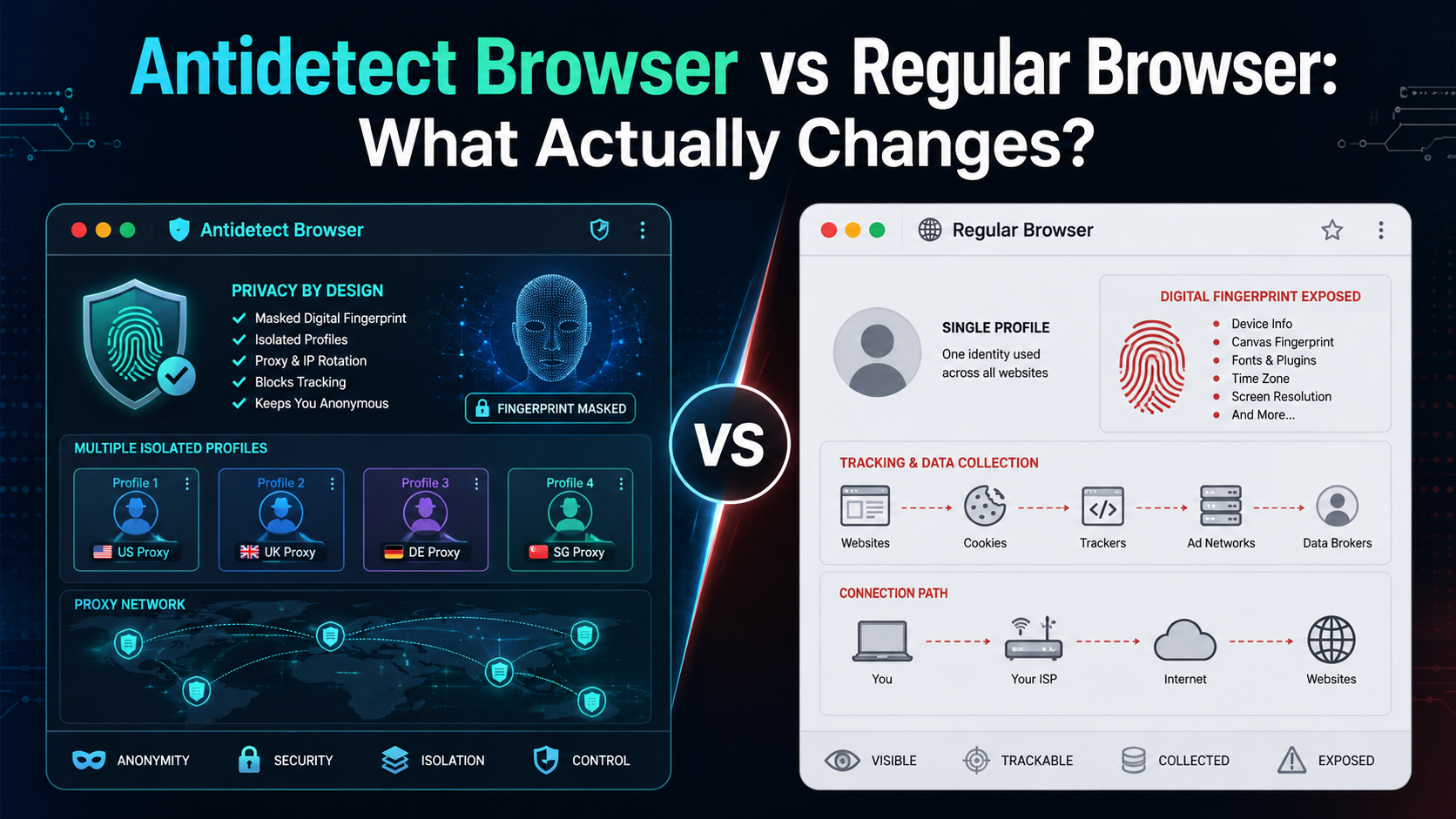
If an antidetect browser looks almost the same as Chrome, Firefox, or Edge, what actually makes it different?The biggest difference is not how websites look or how fast pages load. It is how the browser manages your digital environment.A regular browser is designed mainly for everyday browsing. An antidetect browser is designed to create and manage multiple isolated browser profiles, each with[…]
.png)
In today's digital age, safeguarding personal information while browsing the web is becoming increasingly important. One of the most effective tools for protecting online privacy is the Antidetect Browser. With its ability to disguise device information, window size, and IP addresses, the Antidetect Browser helps users maintain anonymity while surfing the internet. Additionally, it prevents[…]
