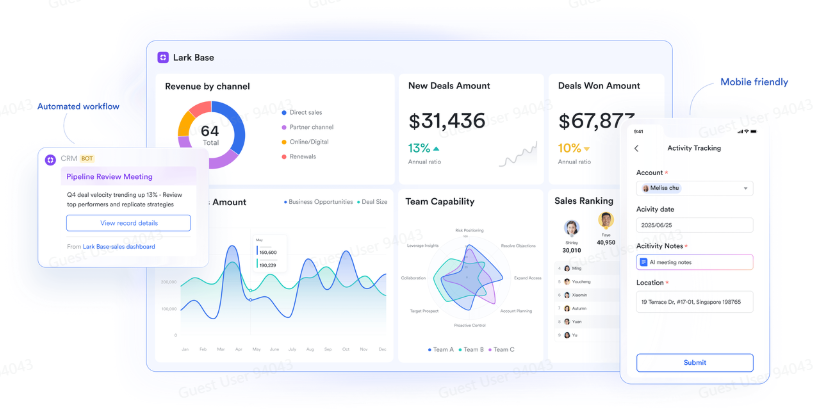

Agility in business used to mean fast reactions—responding quickly to change. Today, agility means anticipation: the ability to see patterns before they unfold and act with precision. Yet this level of awareness can't come from instinct alone. It comes from data—and more importantly, from how that data moves between people, processes, and decisions.
A CRM app may reveal customer behavior, but true agility depends on how that information connects across teams. Data has no value if it lives in isolation. What separates adaptive organizations from stagnant ones is how fluidly insight transforms into action.
That's where Lark's connected workspace reshapes the idea of collaboration. Instead of siloed systems or delayed handoffs, teams operate inside one environment where communication, analytics, and execution flow together—not as separate stages, but as one continuous cycle.
Lark Base: Making data dynamic, not static
Lark Base
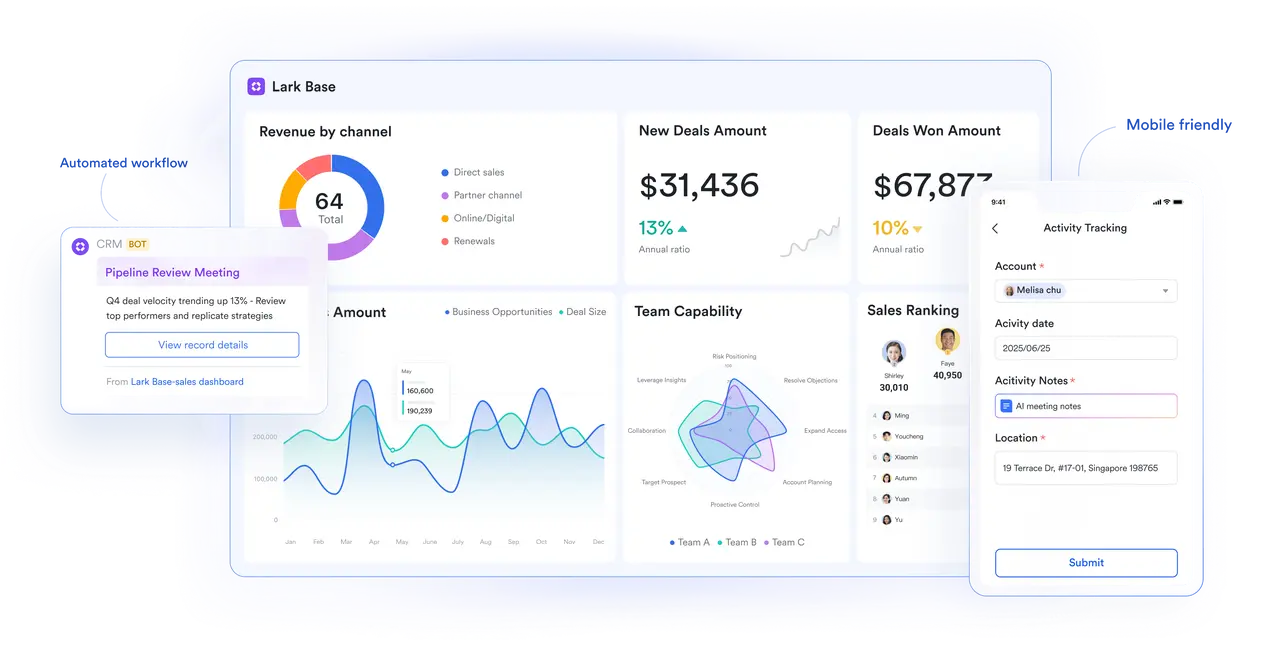
In agile organizations, data isn't a reference—it's a live participant in every decision. Lark Base gives teams the space to organize and act on their information as it changes, transforming static records into living workflows. This flexibility is especially useful for teams already using CRM software and needing a system that can adapt to broader operational processes.
Imagine a company tracking multiple product rollouts. Each table in Lark Base holds timelines, budgets, and progress metrics. When a task status moves from "In Progress" to "Complete," users can set up an automation to send a Lark Messenger notification to task owners or stakeholders.
There's no waiting for someone to "update the tracker" or "send the latest version." Every shift in Lark Base is a real-time signal to the rest of the organization. Managers can spot bottlenecks instantly, sales see what's ready to market, and leadership reviews data that's always current.
In Lark Base, agility becomes measurable. The system doesn't just reflect activity—it propels it forward.
Lark Sheets: Turning raw data into real insight
Lark Sheets
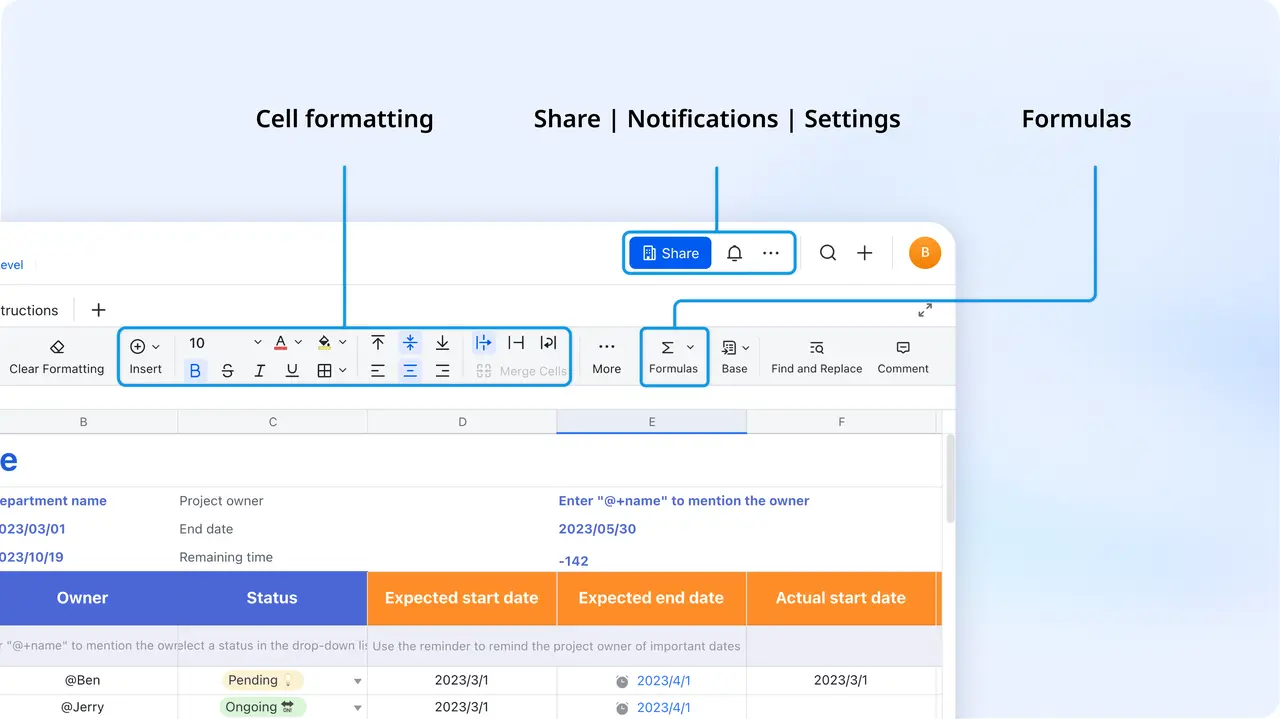
Numbers alone don't drive agility; interpretation does. Lark Sheets connects live data streams with collaborative analysis, helping teams move from observation to decision without delay.
A finance lead reviewing quarterly performance no longer downloads files or waits for reports. The CFO adds a note beside one line, the operations manager replies with context, and the discussion evolves directly next to the data itself.
By collapsing the space between data and discussion, Lark Sheets keeps decisions grounded in real-time accuracy. Trends are spotted faster, adjustments made immediately, and every insight is transparent to all involved. Agile organizations thrive on this kind of clarity—where the conversation is the data, not about it.
Lark Tasks: Keeping motion continuous
Lark Tasks
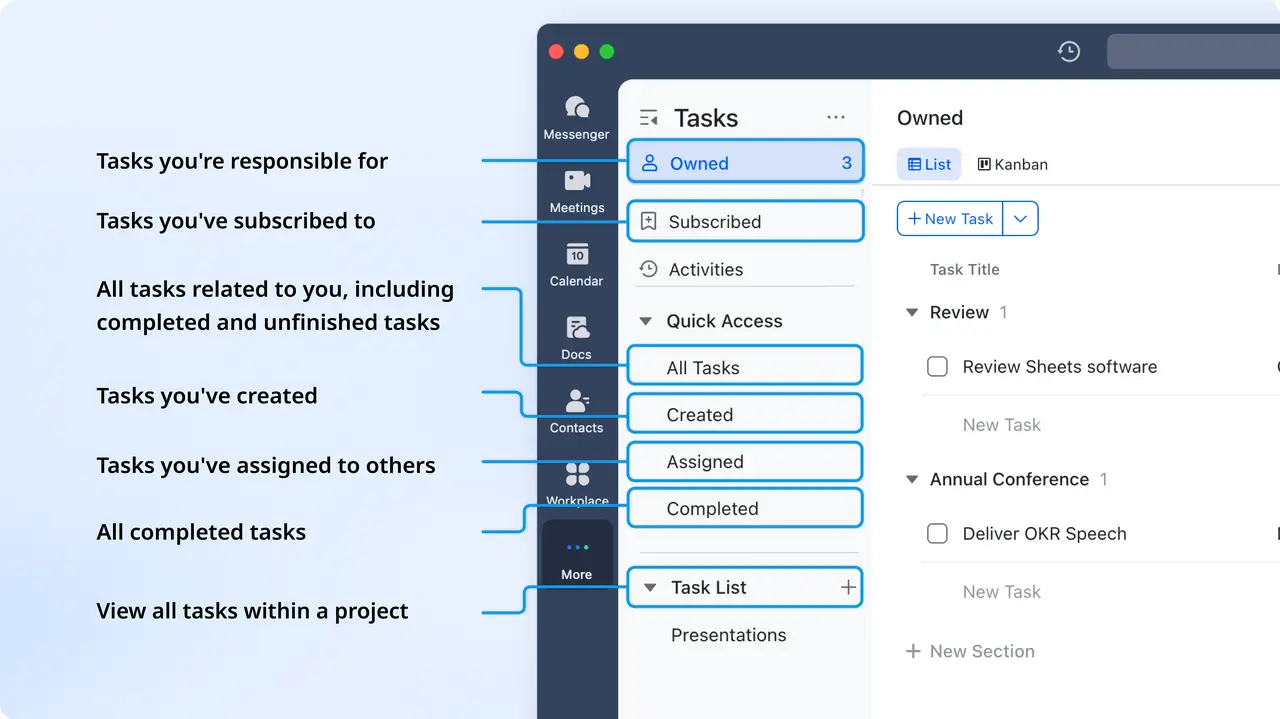
Data-driven collaboration means nothing if decisions don't turn into outcomes. Lark Tasks ensures that every idea, update, or analysis becomes action.
After reviewing data in Lark Sheets or progress in Lark Base, teams can create tasks directly linked to those insights. A sales spike may lead to a follow-up campaign; a drop in retention can trigger a client feedback review. Each task carries context—where it originated, who owns it, and what data supports it.
As work advances, progress updates flow back into Lark Base automatically every hour. You can also manually sync the latest data, maintaining a self-sustaining rhythm of information and accountability. Tasks remove friction between discovery and delivery. In fast-moving environments, that's what keeps momentum consistent: fewer delays, no missed handoffs, just continual motion.
Lark OKR: Aligning performance with data reality
Lark OKR
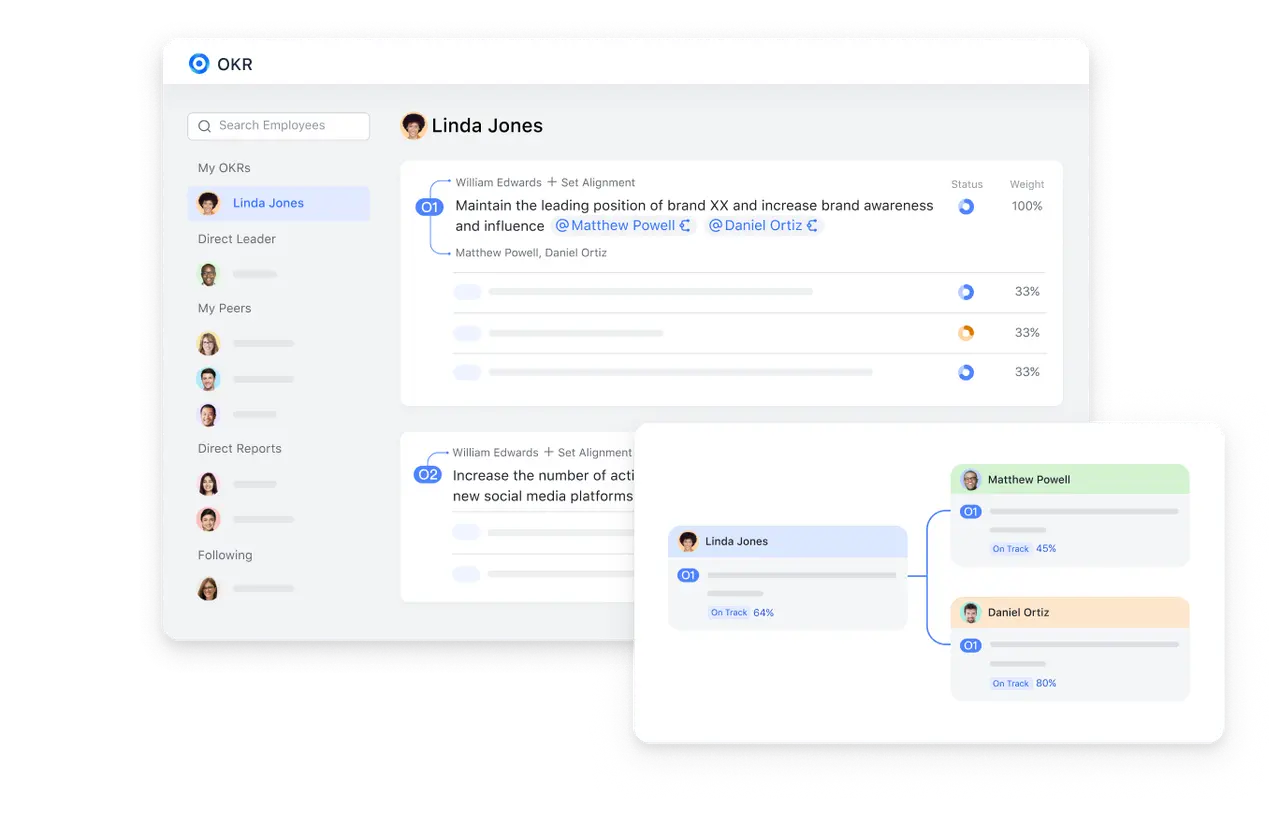
Agile businesses don't just move quickly—they move with intent. Lark OKR (objectives and key results) ties organizational goals directly to measurable outcomes, helping teams see how their daily actions contribute to the bigger picture.
Teams can define clear objectives and link them to live metrics from Lark Base. If progress is set to update automatically in the "Progress Settings", and when a key result improves—say, customer satisfaction increases or turnaround times drop—, the dashboard will reflect changes instantly after the metric owner fills in their progress. Leaders can see which projects drive measurable results and which areas need attention.
Because Lark OKR connects directly to live data, strategy and execution stay aligned at all times. It replaces end-of-quarter guesswork with continuous insight. Everyone knows not just what they're doing, but why it matters—and how progress is tracking in real time.
Lark Docs: Turning collective insight into shared intelligence
Lark Docs
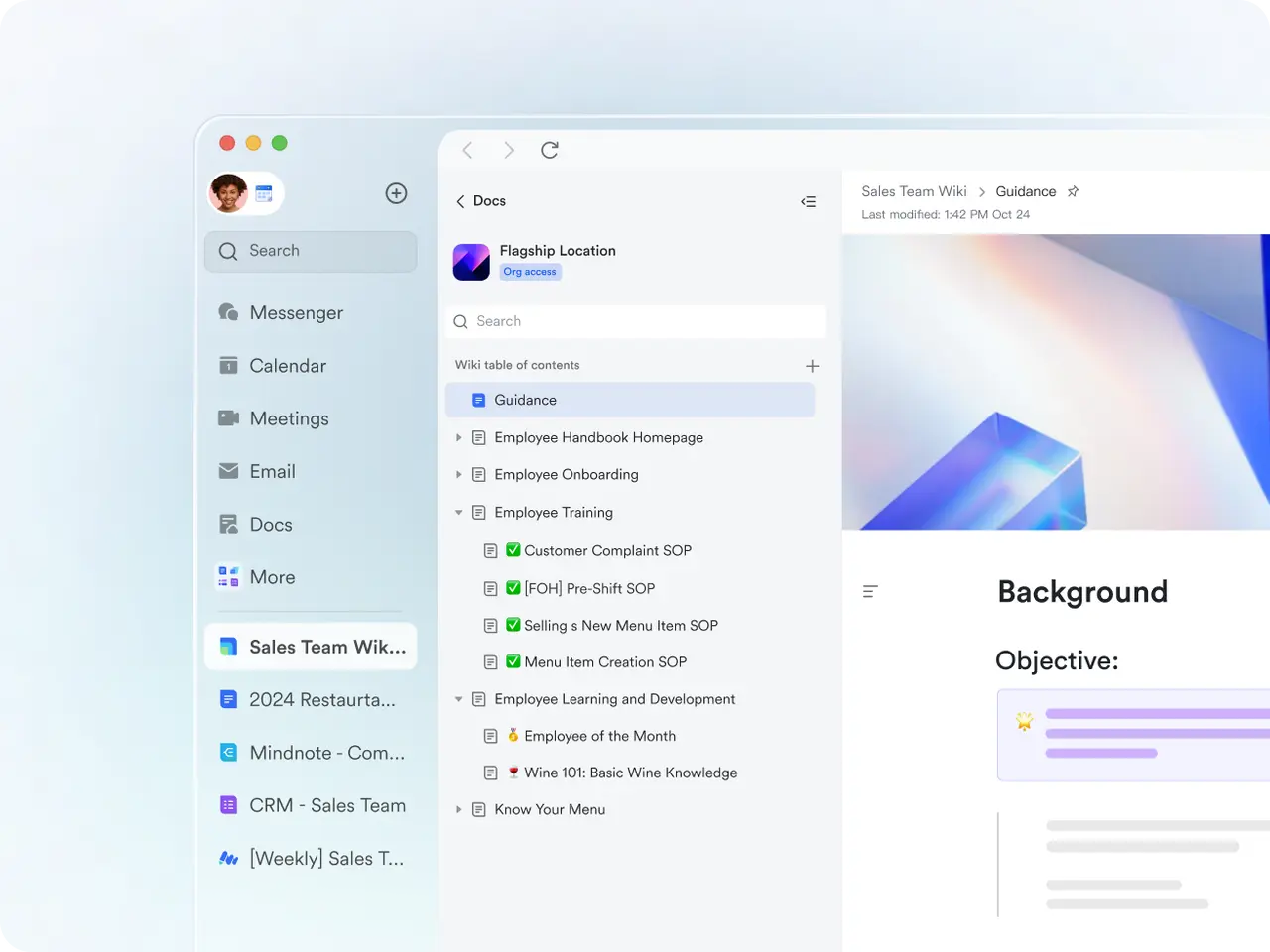
Agility thrives when ideas move freely. Lark Docs enables this by transforming collaboration into a real-time exchange of thought and evidence. Documents aren't just written—they evolve through shared knowledge.
Teams working on market strategy, for instance, can pull data directly from Lark Sheets into a doc, discuss implications inline, and finalize action points as they go. Comments, context, and conclusions all live in one space.
Because Lark Docs is part of the same ecosystem, it doesn't exist in isolation. Every insight captured can become a task, feed a Lark OKR, or update a Lark Base record. The information cycle closes itself—knowledge creates action, action creates new data, and data inspires refinement.
Lark Docs helps organizations move from documentation to decision—a shift that defines the next generation of agile management.
Lark Meetings: Real-time collaboration that accelerates clarity
Lark Meetings
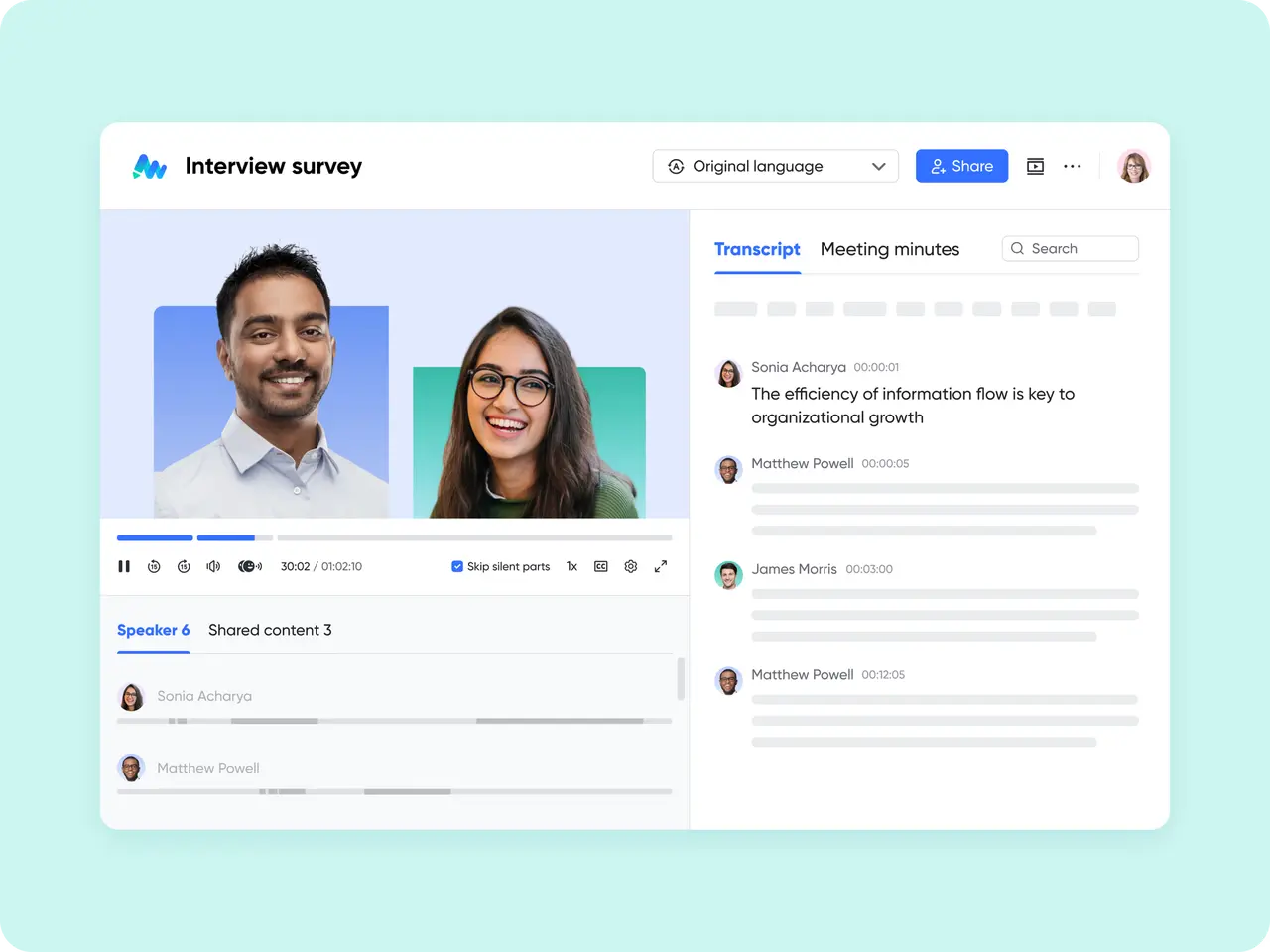
Agility thrives when decisions happen fast—but not rushed. Lark Meetings bridges data and discussion by letting teams act on insights the moment they arise. Instead of jumping between dashboards and calls, teams can pull live data from Lark Base directly into the meeting interface. Participants analyze numbers, edit Lark Docs, and assign next steps without switching tabs.
For example, during a sprint review, the team examines updated adoption metrics, identifies performance gaps, and instantly creates tasks for follow-up testing. Once the meeting concludes, all updates—notes, tasks, and timeline changes—sync across Lark via automation, manual follow-up or setup. The result is a decision cycle that stays uninterrupted, where every meeting is a moment of progress, not pause.
Lark Calendar: Aligning schedules with business velocity
Lark Calendar
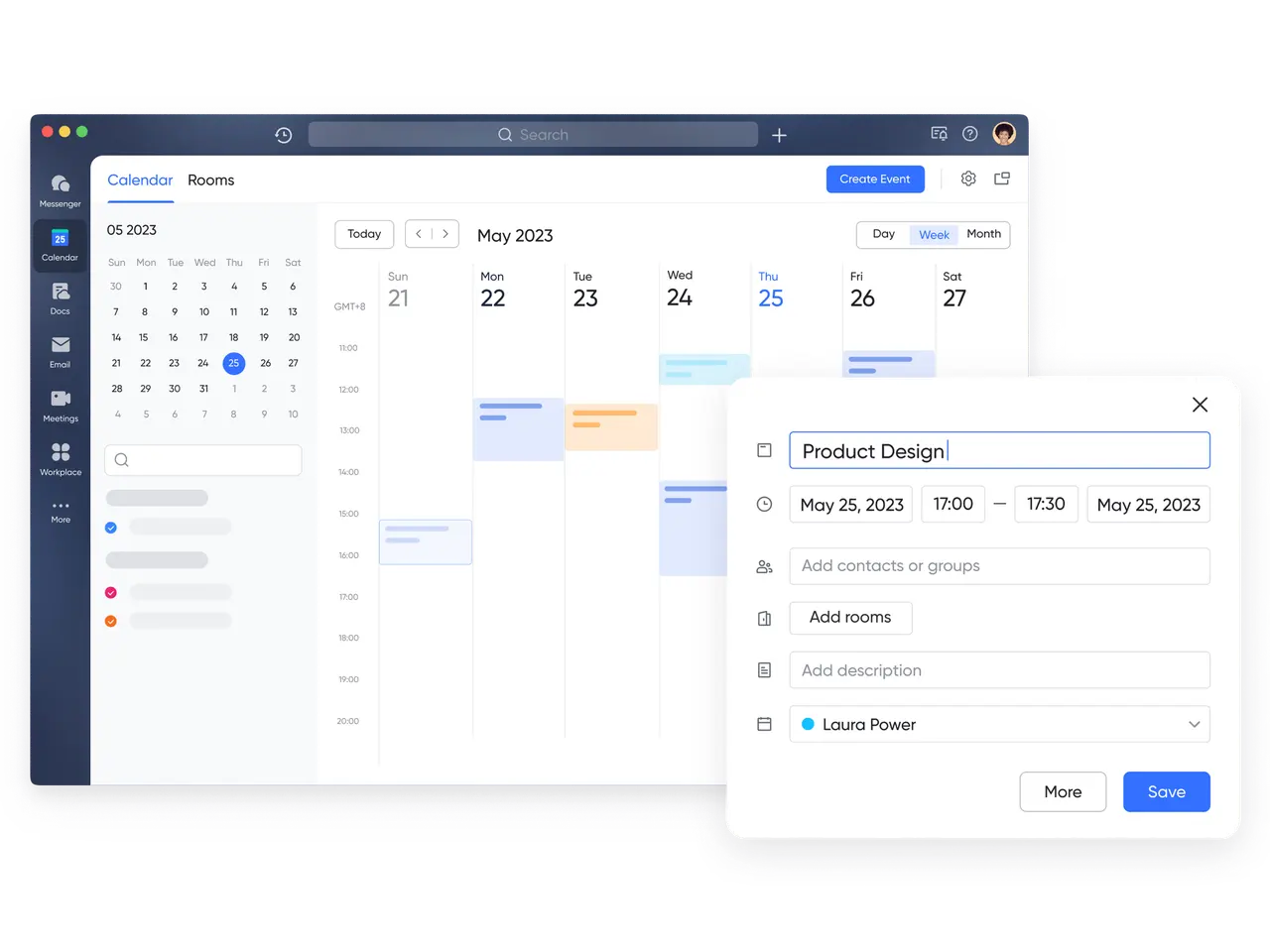
Fast decision-making requires more than great data—it needs timing that supports momentum. Lark Calendar keeps teams synchronized by linking key events, milestones, and meetings directly to active work. When project deadlines shift in Lark Base, users can set up automations to create or update calendar events, preventing conflicts and ensuring every department moves in sync.
Consider a global operations team reviewing quarterly goals. Lark Calendar displays cross-regional timelines, automatically converting time zones and embedding links to related Lark Docs, Lark Tasks, or Lark Base dashboards. Teams no longer waste hours coordinating logistics; every discussion and decision fits naturally into the rhythm of the work itself.
Lark Calendar gives agility a timeline—transforming scheduling into an active component of decision-making.
Lark Wiki: Turning decisions into institutional intelligence
Lark Wiki
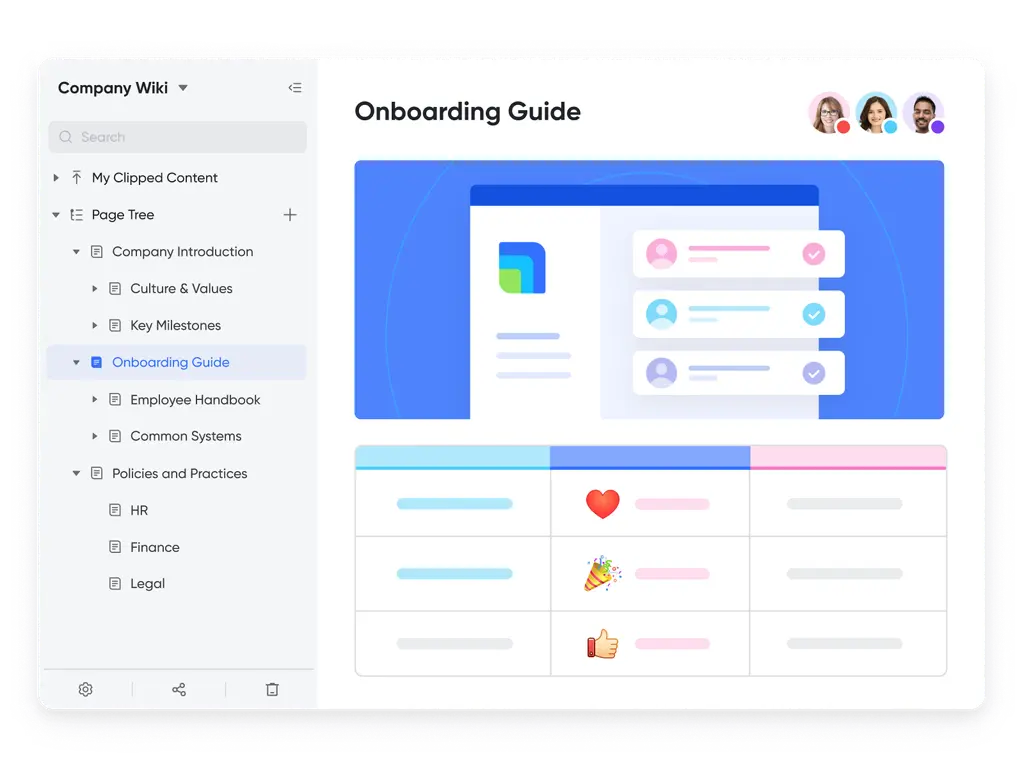
In agile organizations, speed matters—but so does memory. Lark Wiki captures the reasoning behind decisions, ensuring that valuable insights aren't lost once projects move forward. Each major initiative, workflow, or experiment can be documented as a Lark Wiki entry linked to the original data in Lark Base or Lark Sheets.
For instance, after completing a product release cycle, the team records key findings in Lark Wiki—what metrics improved, what didn't, and how decisions were made. The next team facing a similar challenge can reference that documentation instantly. Over time, this forms a living knowledge system where every decision contributes to future agility.
Lark Wiki keeps the organization from relearning the same lessons twice—turning fast execution into sustainable intelligence.
Lark Mail: Keeping external communication connected to internal action
Lark Mail
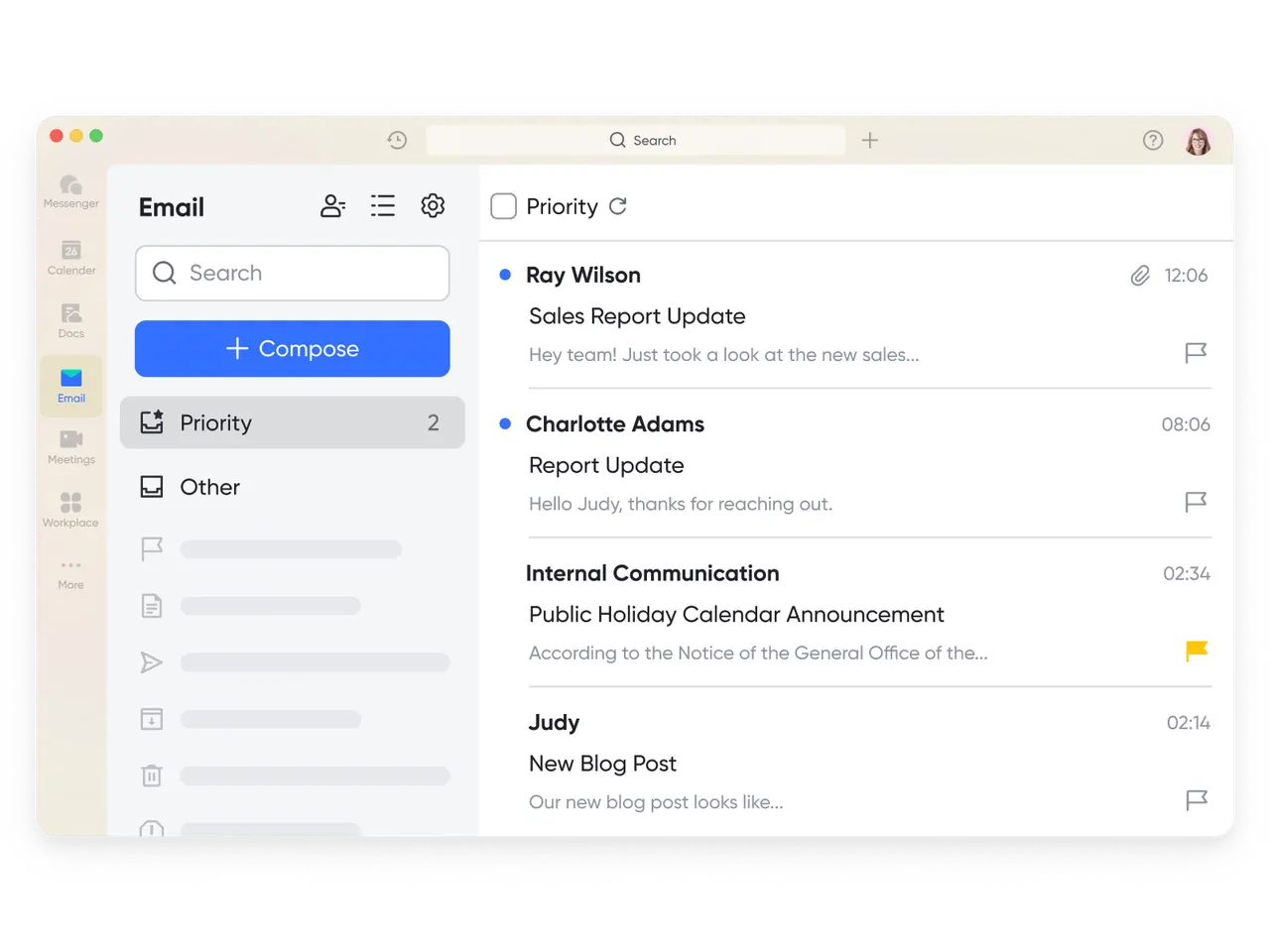
No matter how agile an organization is internally, decisions still depend on external feedback—from clients, vendors, or partners. Lark Mail ensures those communications stay part of the same connected workflow.
When a client sends a performance update or request, the email doesn't sit isolated in someone's inbox. With a few clicks, it becomes a linked task, or a shared item in Lark Messenger for discussion. The context behind each message stays intact, and responses tie directly to measurable outcomes.
Lark Mail ensures that external conversations don't slow internal agility. It closes the loop between communication and execution, keeping every stakeholder—inside or outside the company—aligned in real time.
Conclusion
In data-driven organizations, agility is defined by connection—how fast information travels, how smoothly decisions are made, and how seamlessly actions follow. A CRM app captures the "what," but connected platforms like Lark deliver the "how."
With Lark Base automating workflows, Lark Sheets delivering real-time insight, Lark Tasks ensuring accountability, and features like Lark Meetings, Lark Calendar, Lark Wiki, and Lark Mail tying everything together, decision-making becomes continuous. Teams move from data to direction without losing time or clarity.
That's the future of agile business management: not just faster work, but smarter systems—and platforms like Lark are leading that shift, setting a new standard for project management tools built for a world that runs on data, collaboration, and connection.
Related Blogs

1. What is Captcha Typing for Money?Captcha (Completely Automated Public Turing test to tell Computers and Humans Apart) is a security tool used to distinguish real users from bots, by requiring them to re-enter distorted characters displayed in an image.Typing Captcha to earn money is the job of re-entering these characters on online platforms and receiving corresponding remuneration. After[…]

Websites are always on the lookout for bots. If your data collection tool is recognized as automated, it will be quickly blocked. Today, most platforms deploy advanced detection technologies such as CAPTCHAs, browser fingerprinting, and behavioral tracking to prevent bots.When collecting data at scale for SEO, ecommerce, or market research, getting blocked not only wastes your time, but also[…]
There is a point where a group chat stops being a management system. Usually it arrives quietly. You add the tenth contractor, or the second warehouse, or a support rotation in another timezone, and suddenly nobody can tell you who read the new returns policy, who finished the safety module, or which version of the shift roster is the real one. That is the problem this software category exists to[…]
.png)
Nowadays, websites can easily track user behavior through IP address and device parameters. This means that, even if you have changed your IP or used incognito mode on your browser, the system can still detect that you are logging in and operating multiple accounts at the same time.An effective solution to overcome this situation is to use it antidetect browser – specialized tool to help simulate[…]

Telegram bị chặn bởi nhà mạng tại Việt Nam đang là chủ đề nhận được sự quan tâm lớn từ cộng đồng người dùng. Sáng ngày 26/5/2025, nhiều người tại Việt Nam bất ngờ không thể truy cập và sử dụng ứng dụng Telegram như bình thường. Điều này gây gián đoạn trong quá trình liên lạc cá nhân, trao đổi công việc cũng như sao lưu tài liệu quan trọng.Nhằm giúp người dùng khắc phục tình trạng này, bài viết[…]

Two-factor authentication (2FA) is one of the most effective methods to protect your account from common security threats. In this article, Hidemium will guide you step-by-step through enabling 2FA on popular platforms, explaining why the feature is important and how it helps improve personal information security.1. What is 2FA? A Simple Explanation for BeginnersTwo-Factor Authentication (2FA) is[…]
