Three AI Video Generators Under Real Use: VideoAI, Deevid, and Fliki Compared
Try Hidemium for free

I tested three platforms that all claim to turn ideas into moving images quickly. The goal was simple: run the same set of everyday tasks and note where each tool helped or slowed me down. No rankings. Just observed differences.
Starting Point and Test Setup
I used three recurring needs. First, a short text prompt for a mood scene. Second, a product photo that needed motion. Third, a short script that required clear narration. Each tool received identical inputs. I recorded generation time, number of regenerations, and how much manual cleanup followed.
A recent Wyzowl survey found that 91% of businesses now use video as a marketing tool. The pressure to produce more clips has pushed many creators toward an AI Video Generator. The question is which style of tool fits different daily workflows.
VideoAI: Multi-Model Experimentation
VideoAI gives direct access to several generation models inside one interface. I could switch between Kling, Wan, Seedance, and others without leaving the project.
For pure visual tests the flexibility helped. A prompt that looked stiff in one model sometimes improved after a simple switch. Image-to-video results stayed consistent when I cleaned the source photo first with the built-in background remover and upscaler. Motion control options let me nudge camera direction before generation.
The trade-off appeared in longer or narrated work. Voice and full-scene assembly are limited. I treated VideoAI as a rapid visual sketchpad rather than a complete video producer. When I needed only a five-second motion clip, it stayed efficient.
Deevid: Agent-Led Creation and Canvas Control
Deevid approaches the task differently. It presents an AI agent that plans steps and a canvas for visual arrangement. The platform also routes work across multiple underlying models.
Product-focused tests showed clearer strengths. Uploading a single item photo and asking for platform-ready ad variations produced usable options faster than manual prompting. Character consistency across clips worked better than I expected for simple avatar-style work. The canvas made small positional adjustments feel direct.
Complex multi-subject scenes still required several regenerations. The agent reduced some prompt trial-and-error, yet final polish often moved outside the tool. Deevid felt strongest when the brief was visual and commercial rather than narrative.
Fliki: Script-to-Finished Narrated Video
Fliki starts from text and aims for a complete package. Script, visuals, AI voice, captions, and music arrive together. The voice library is large—over two thousand options across more than eighty languages.
When I pasted a short explainer script, the first output already contained timed narration and matching scenes. Blog-to-video and slide-to-video paths followed the same logic. For faceless educational or promotional content the speed was noticeable. Digital twin and avatar features added another layer for presenters who want on-screen presence without filming.
Visual originality sat lower than pure generation tools. Many scenes relied on stock-style or templated motion. When the priority was clear speech and fast turnaround, that limitation mattered less. When the priority was unique visuals, I needed extra steps.
Side-by-Side Observations From Testing
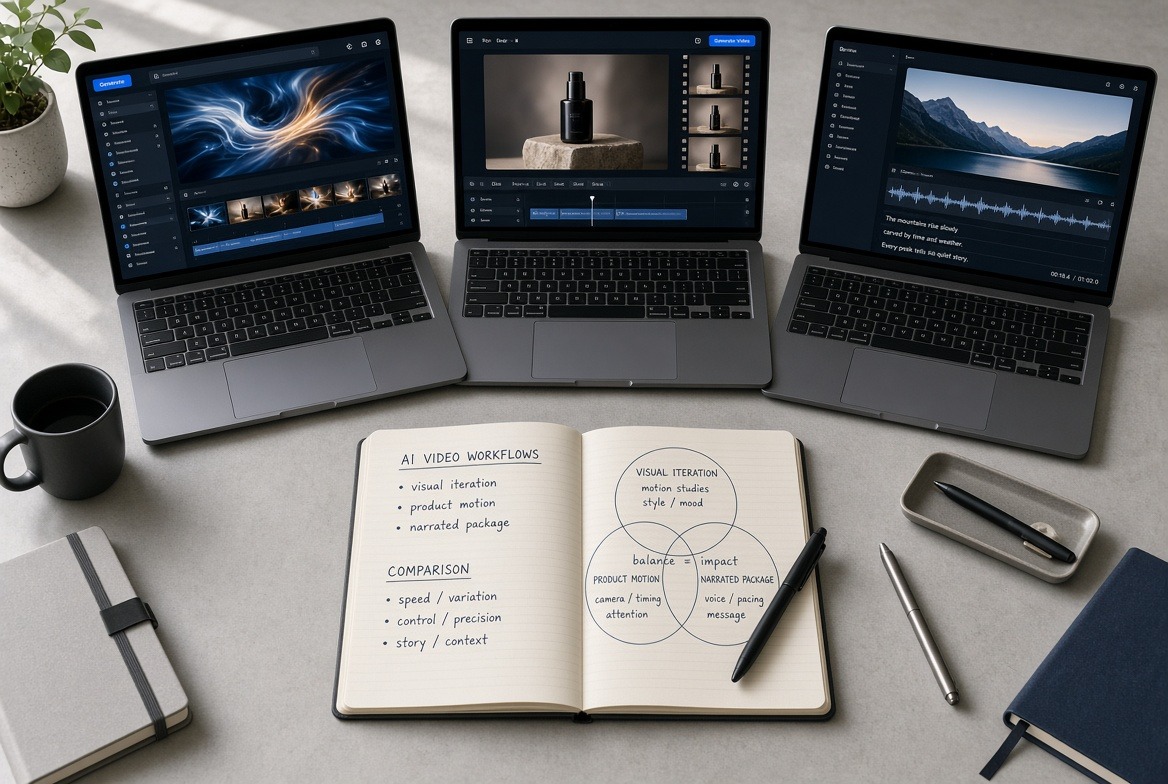
VideoAI excelled at quick visual iteration and model switching. Deevid handled product motion and structured ad-style outputs with less manual prompting. Fliki delivered the most complete narrated videos from text alone.
All three reduced the time from idea to first draft compared with traditional editing. None removed the need for final human review. Artifacts, inconsistent motion, and limited narrative control appeared in every tool at different points.
Generation speed stayed under two minutes for short clips across the board on standard settings. Longer or higher-resolution requests introduced waits and credit limits that varied by plan.
Who Each Tool Suits in Practice
Creators who test many visual styles in one session will likely prefer VideoAI’s model access. E-commerce and ad teams that start from product images may find Deevid’s agent and canvas more direct. Educators, marketers, and faceless channel operators who need reliable voice and captions often move faster inside Fliki.
Some users keep more than one tool. Visual drafts in one platform, narration and packaging in another. The combination depends on the final format required.
Practical Takeaway After Parallel Tests
An AI Video generator is no longer a single category. The three platforms solve overlapping but distinct problems. Choosing among them works best when you define the bottleneck first—visual exploration, product motion, or narrated completion—rather than chasing the highest demo quality.
The measurable gain across all three was the same: more attempts in the same hours. The difference lay in which part of the pipeline each tool shortened. That distinction remains the most useful filter when the next project lands.
Related Blogs

5 Best Places to Buy Taboola Agency Ad Accounts in 2026Scaling native ads on Taboola sounds straightforward until you actually try it. Standard accounts come with tight spending caps, slow approval queues, and a warming period that can drag on for weeks before you see real results. For media buyers and performance marketers managing substantial budgets, that level of friction is more than just a[…]

Advertising products and services on social networks are widespread to reach customers more effectively, especially on Facebook. Therefore, the seller’s primary concern is to use multiple Facebook ad accounts effectively to get the right users while ensuring that they do not violate the regulations of this giant. The following article will provide exciting information for those looking to sell on[…]

Data represents a valuable asset for any organization. Financial records, employee details, and proprietary information all require protection. The boundaries of data security have shifted because cloud solutions and remote work continue to expand. Protecting this information demands a comprehensive approach to online privacy and security across the entire organization.Financial penalties,[…]

An undetectable browser, also known as a browser antidetect or anti-detection browser, is an essential tool for users to protect their online privacy and manage multiple accounts without detection. However, using unreliable antidetect software can result in various risks, such as data leaks, account bans, poor performance, and malware threats. In this article, we will analyze the potential[…]

In 2026, Facebook remains one of the most powerful platforms for digital marketing, e-commerce, and social media management. Whether you're a media buyer running multiple ad campaigns, a social media manager handling client accounts, or a marketer practicing Facebook account farming to scale your operations, managing multiple Facebook accounts safely has never been more critical — or more[…]

The “big five” business functions - campaign management, audit, and commercial asset management - are common to modern digital marketing agencies, e-commerce, or performance teams working across several geographic regions. For optimized local asset management, it’s important to have strong controls over network connections and browser environments.Without having to package physical SIMs, send[…]
